
Homelessness, A Conversation with young people who have experienced homelessness in the Monadnock Region.
by Erika Alusic-Bingham
Western Hillsborough County Family Services Coordinator
Family Resource Specialist
Community Action Partnership Hillsborough and Rockingham Counties
May, 2026
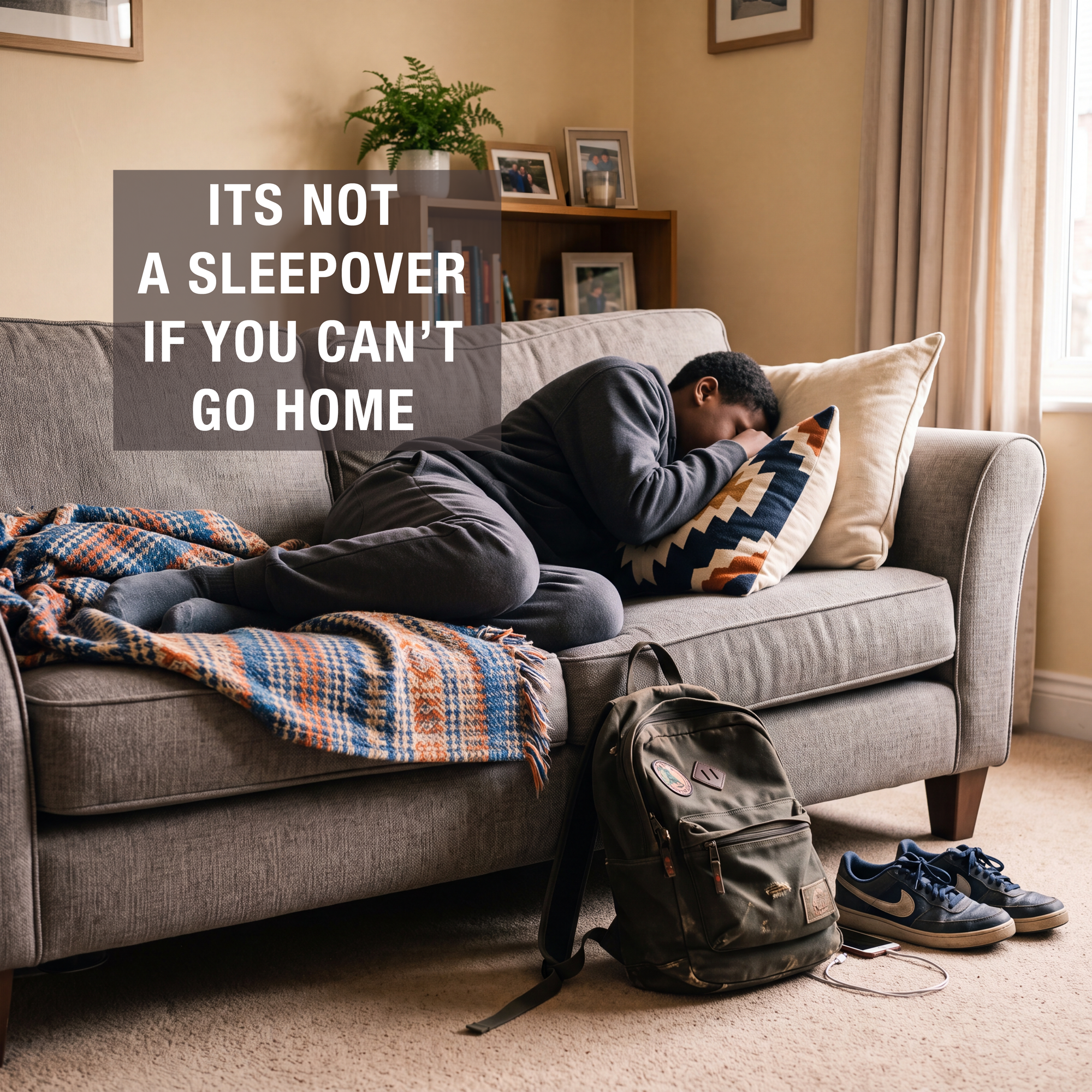
What is it like to go to school when you are homeless? What is your day like? How does it feel? I sat down to interview three young women about what it was like to be homeless in The Monadnock Region. What did they want people to know about being homeless, about being them? One of the young women is currently homeless. One has housing but was recently homeless and one lived in a shelter but has had housing for a while since being homeless. All three agreed that people here don’t understand what a homeless family looks like. They all said again and again, “We are just normal kids, you can’t tell we are homeless, we don’t have shopping carts or live under a bridge, but we don’t (didn’t) have a home. A place for our stuff.” They all agreed to be interviewed if I did not use their names or their grades or the school they went to. Two are in middle school and one is in High School in districts in the Monadnock Region.
I asked them what the hardest thing about being homeless was. “I don’t have a place for my stuff, I lose all my stuff or it gets stolen where we are staying.” This young lady had been “Couch Surfing” a practice of staying with friends or relatives for a few days at a time. When couch surfing a person usually does not have a room or a bed, they sleep on a couch or share a space. This is also known as doubling up. Another one of the girls said that she was distracted all day wondering where she would sleep that night. Her friends nodded and agreed that it was very hard to concentrate on school or other responsibilities when you were not sure about where you or your family would be that night. They all said their grades had really suffered during their homelessness. They missed school and often came to school unprepared. The places they stayed often didn’t have internet or a place where they could do homework. “Sometimes in school I would think, what if my mom doesn’t come pick me up? Would I just get on my old bus and go to my old house and then walk down the street? I got in trouble for not paying attention because I was thinking about that.” One of the girls got very serious and said that for her the worst part was that her family couldn’t stay together. She and her siblings stayed in a shelter but their dad stayed where his work was and one older brother went to stay with his grandparents. She remembered the first night after they lost their housing, “It was the first time I ever had to go to sleep without my dad. I didn’t feel safe.”
With that statement, I asked if the other girls had ever felt unsafe. They all got very quiet. They had been chatty and commiserating and laughing about stuff that had happened to them. Then one of the girls said, “Lots of times we stayed with people who weren’t safe because that’s all there was. You know, drunks and people who used drugs. There was lots of fighting and yelling. I was always scared. My mom would always pack us up and leave when things got like that but sometimes we just had to stay because that was, you know, how it was.” Another one of the girls said that they had to stay with relatives who had been abusive in the past and that her mother just stayed with her all the time. “I just dealt with it and kept my mouth shut.” The third girl said quietly, “My mom was doing her best, sometimes things were bad.”
We talked about how they processed or dealt with their emotions about being homeless. All of them said that they were embarrassed about being homeless and didn’t talk to their friends about it. “I can’t invite them over, I can’t be like hey come over but I don’t really know where we are going to be.” One girl said that she tried talking to a teacher about it but that the teacher tried to “fix” it and give suggestions about not being homeless. “I just wanted her to hear me, you know, like get it what I was dealing with. She couldn’t fix it because it wasn’t broken the way she thought it was.” I asked what that meant and another one of the girls jumped in and said, “You don’t just get unhomeless. You don’t have any money because you can’t find a job and you can’t find a job because you are always looking for a place to stay. You can’t just get an apartment because there aren’t a lot of them and they are expensive. If you are going to help, you need to hear the whole issue not just say, get an apartment.” Two of the girls were very frank about their mental health. “Oh I am definitely not ok.” She continued “It (homelessness) makes me a little coo coo.” The other girl admitted that homelessness had caused her to start self-harming, cutting and not eating. “We never had enough food at the right time. I got worried that we were spending money on food that we could be saving to find a place so I stopped eating.” They all agreed that their parents were too stressed out to talk to about their fears and concerns. “They are in their own world” one of the young women commented. One of the girls said that homelessness makes people “Act and do stuff different, not all bad, just changes who you are a little. Maybe you were loud and silly and now you are kinda quiet and keep to yourself.” She added “That’s for our parents too.”
We wrapped up our conversation with a question on how they thought they could avoid being homeless as adults. “Make sure my mental health is good.” “Don’t get pregnant too young.” “Have teachers who believe in you so you get an education and a good job.” One girl said she would take half her pay and save it so she could always afford her house. They talked about budgeting, learning how to pay bills on time and making sure they didn’t hang out with the wrong people, picking the right guy to be with “someone who was going to be responsible not just spend money and think of themselves”. I asked if they blamed their parents for their homelessness. They said they did and they didn’t. Two girls were very clear that their parent’s mental health played a big role in whether they could keep a job or not. There was also a common theme about dating someone stable who, “wouldn’t mess things up for you”. They said that the homelessness had made their parent’s depression worse and that things got crazier after that.
“The worst thing about being homeless is you lose everything, you lose friends, you lose people, you lose your pets, you lose your stuff, you lose your place. You feel unattached, floating.”
“My grandma died and we didn’t know because we were in our car and no one could find us because we were kind of hiding because DCYF would take us if they knew.”
“We couldn’t pay for our storage unit and we lost all of our stuff, my mom lost pictures of her grandma and some other special stuff. It was really sad.”
“I don’t want people to think we are bad because we were homeless, it is not like the movies not everyone is crazy and on drugs.”
“Being homeless isn’t easy, it is really hard.”